No matter what anyone says, the effort required to change unhealthy behaviour can be tough.
And well, like you, I’m not perfect either.
One of my unhealthy behaviours is engaging in negative self talk and occasionally sliding into imposter syndrome.
For those of you that don’t know, this is when you think you are inadequate despite any evidence that proves otherwise (think self-doubt).
This includes, the message going around in my head “who am I to tell you about improving your health if I can’t change this one thing”.
But the point is, the struggle to make consistent healthy change is real.
 Behaviours can be a combination of all 3.
Some days are better than others.
One day you can do all the right things, wake up fresh, get in some exercise, eat clean, stay positive and generally glow all things health, all while working, spending time with your family and keeping calm in peak hour traffic.
Then the next day, it’s frantic, you’re tired, life’s somehow harder and you can fall completely off track.
Maybe that looks like craving and eating a whole block of chocolate, drinking a few too many cups of coffee, sitting on the couch rather than getting in some movement, an extra glass of wine, getting cranky and or going to bed too late.
I’ve been there and I’m going to make a giant leap and take a guess that you have too.
The thing we know about long term and sustainable healthy living, consistency is key.
If you stay on track for longer and more often, you will start to see results.
Behaviours can be a combination of all 3.
Some days are better than others.
One day you can do all the right things, wake up fresh, get in some exercise, eat clean, stay positive and generally glow all things health, all while working, spending time with your family and keeping calm in peak hour traffic.
Then the next day, it’s frantic, you’re tired, life’s somehow harder and you can fall completely off track.
Maybe that looks like craving and eating a whole block of chocolate, drinking a few too many cups of coffee, sitting on the couch rather than getting in some movement, an extra glass of wine, getting cranky and or going to bed too late.
I’ve been there and I’m going to make a giant leap and take a guess that you have too.
The thing we know about long term and sustainable healthy living, consistency is key.
If you stay on track for longer and more often, you will start to see results.
 Just like building up savings in your bank account, it can take time and ongoing effort to see rewarding growth over time.
It’s the habits over months – years that compounds over your lifetime and determines the quality of your investment.
Your body is an investment.
And while more replacement parts are becoming more available via hip replacements, organ transplants and even new 3D printing options, it’s worthwhile trying to avoid unnecessary intervention where you can.
Sometimes the rewards of your efforts are subtle.
This could be a little more energy in the morning, less stiffness or less pain, less often.
It is a natural human tendency that we don’t notice the pain that we don’t have.
The absence of discomfort is not a very good motivator.
In general, we are either motivated by moving towards pleasure or away from pain.
This is exactly why we want to avoid using pure motivation to stay on track.
Just like building up savings in your bank account, it can take time and ongoing effort to see rewarding growth over time.
It’s the habits over months – years that compounds over your lifetime and determines the quality of your investment.
Your body is an investment.
And while more replacement parts are becoming more available via hip replacements, organ transplants and even new 3D printing options, it’s worthwhile trying to avoid unnecessary intervention where you can.
Sometimes the rewards of your efforts are subtle.
This could be a little more energy in the morning, less stiffness or less pain, less often.
It is a natural human tendency that we don’t notice the pain that we don’t have.
The absence of discomfort is not a very good motivator.
In general, we are either motivated by moving towards pleasure or away from pain.
This is exactly why we want to avoid using pure motivation to stay on track.
 If your subconscious is working against you, or your healthy habits are irregular at best, you will need to start using motivation, determination and willpower to try and carry you towards what you really want.
Your level of effort just went up massively.
How long can you keep it up?
If your subconscious is working against you, or your healthy habits are irregular at best, you will need to start using motivation, determination and willpower to try and carry you towards what you really want.
Your level of effort just went up massively.
How long can you keep it up?
Read More
Unhealthy behaviours can be physical, mental or emotional.
Behaviours can be a combination of all 3.
Some days are better than others.
One day you can do all the right things, wake up fresh, get in some exercise, eat clean, stay positive and generally glow all things health, all while working, spending time with your family and keeping calm in peak hour traffic.
Then the next day, it’s frantic, you’re tired, life’s somehow harder and you can fall completely off track.
Maybe that looks like craving and eating a whole block of chocolate, drinking a few too many cups of coffee, sitting on the couch rather than getting in some movement, an extra glass of wine, getting cranky and or going to bed too late.
I’ve been there and I’m going to make a giant leap and take a guess that you have too.
The thing we know about long term and sustainable healthy living, consistency is key.
If you stay on track for longer and more often, you will start to see results.
How are your health savings?
Just like building up savings in your bank account, it can take time and ongoing effort to see rewarding growth over time.
It’s the habits over months – years that compounds over your lifetime and determines the quality of your investment.
Your body is an investment.
And while more replacement parts are becoming more available via hip replacements, organ transplants and even new 3D printing options, it’s worthwhile trying to avoid unnecessary intervention where you can.
Sometimes the rewards of your efforts are subtle.
This could be a little more energy in the morning, less stiffness or less pain, less often.
It is a natural human tendency that we don’t notice the pain that we don’t have.
The absence of discomfort is not a very good motivator.
In general, we are either motivated by moving towards pleasure or away from pain.
This is exactly why we want to avoid using pure motivation to stay on track.
Motivation doesn’t work!
Over and over again, we see that motivation doesn’t really work. Things that are far more likely to work include sticking to a routine. I know, sounds boring right! If you make good decisions purely by operating on automatic pilot, you are far more likely to see results. Then you will be able to get a new perspective, soar above your goals.
If your subconscious is working against you, or your healthy habits are irregular at best, you will need to start using motivation, determination and willpower to try and carry you towards what you really want.
Your level of effort just went up massively.
How long can you keep it up?

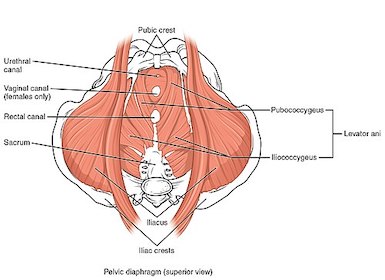

 What does this mean?
You don’t want to form a habit of contracting the pelvic floor muscles all day long.
This can start to lead to its’ own unique set of challenges and issues.
You don’t want to contract any other muscle all day long either, so your pelvic floor shouldn’t be treated any differently.
In fact, you can start to develop issues such as urinary retention, which can predispose you to bladder and kidney infections or stones anywhere along the pathway.
If you want to learn more about pelvic floor activation,
What does this mean?
You don’t want to form a habit of contracting the pelvic floor muscles all day long.
This can start to lead to its’ own unique set of challenges and issues.
You don’t want to contract any other muscle all day long either, so your pelvic floor shouldn’t be treated any differently.
In fact, you can start to develop issues such as urinary retention, which can predispose you to bladder and kidney infections or stones anywhere along the pathway.
If you want to learn more about pelvic floor activation,