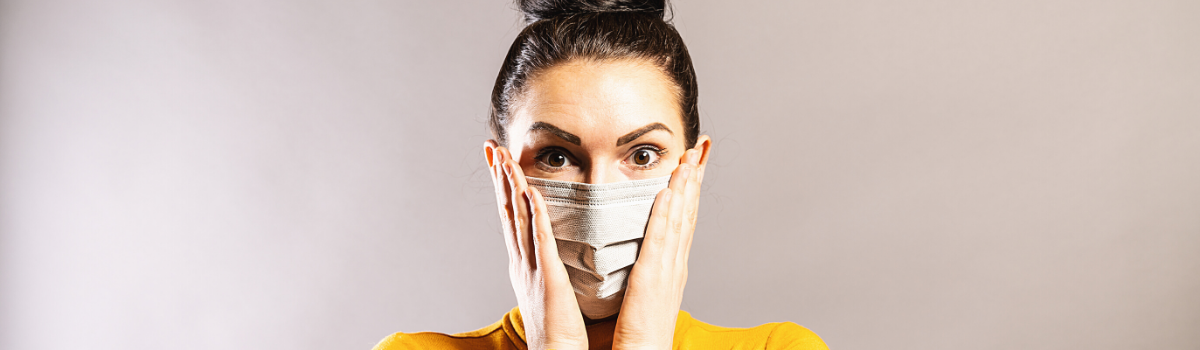
Who would have thought only a few months ago that the whole Melbourne community would need to wear a face mask to leave the house.

In fact, this was probably unimaginable just a couple of weeks ago.

We thought it would be useful for our Osteopaths to give you some practical advice about wearing masks, how to safely take them on and off, as well as some other considerations to keep in mind.

Watch this video on how to wear a face mask by our Osteopath, Dr. Elizabeth Brew for more information.

Wearing a mask can take a little to get used to, initially you may feel a little hot, steamy and dry in the mouth all at the same time.

We are wearing a full kit get up at the clinic and may appear a little unrecognizable right now.

do I need to wear a face mask

Just remember we are the same people on the inside.

What you need to know about wearing a mask

A good mask however won’t affect your breathing capacity, so you don’t need to worry about not getting enough air.

However if you are wearing a mask and feel like this is the case, it is possible that you are not wearing a good enough mask.

This is particularly important if you’re wearing a reusable mask, as it may be made of fabric that isn’t recommended for mask making.

Remember to never touch the front of your mask and use the ear loops when you need to remove it.

If the mask is ill fitting, it may fall and move about, you need to get a different mask.

Just think about it for a second, your breath and other peoples are coming into contact with the front of your mask and is potentially a highly contaminated area.

If you touch it, then touch something else, there is the possibility of a very high viral load being passed around to different surfaces, people, or into your own body.

Wash your hands before and after touching a mask, or use sanitizer when you are not able to do so.

Most people do touch their head and face 15-16x per hour on average and never even realise they are doing it.

avoid touching face

Please try to remain vigilant and conscious of when you are fiddling with the mask (or touching other parts of your face).

You can wear a surgical mask for up to 4 hours, then it will need to be replaced.

These are the type we wear in clinic and are sometimes referred to as a type 1 mask.

An N-95 mask can be worn for up to 5 days – again think about how you will take it on and off, where you will store it and don’t touch the front and resist the urge to fiddle.

Being very realistic, we wouldn’t really recommend that you wear it more than the day, due to storage and safety concerns.

We now require all visitors to Koru to wear a mask at all times (except babies).

To increase our safety and surprisingly our comfort, we also wear face shields.

How about a face shield?

These are a plastic shield that goes over the top of the mask, you can see it closer here.

face shield

While I can’t say why this would be the case, it seems to reduce the amount of fogging we were experiencing in comparison to wearing googles.

A face shield is apparently quite effective, but the Victorian Government guidelines to currently mandate that we must wear masks, so this would not be enough on its’ own.

A reusable mask can also be effective, however they do need to be washed regularly and may need the filtering layer replaced.

Please remember you need to wash at 60 degrees +++ for a minimum of 30 minutes to kill the virus.

In addition, we recommend you wash your clothes after you have been out and about, such as supermarket shopping and immediately have a shower on your return home.

This reduces the chance of you accidentally bringing the virus into your home.

If you don’t have yet have a mask, you can purchase a surgical mask from us for a small charge.

Remember we are all in this together and the more we are able to follow the guidelines and wear a face mask, the sooner we will be able to get back out and about in the community together.
Read More

Are you feeling exhausted and a bit over it, when it comes to C-19? You may be struggling with adapting to change.

This can manifest in a number of different ways.

Change is challenging.

People actively and regularly avoid change.

Some claim “never changing” as a badge of honour.

Do you have anyone like this in your life?

So why do people avoid change?

Stress!

Want extra help, join us here for a free workshop.

time-to-changes

It make you feel anxious, overwhelmed, tense, irritable, the list goes on.

Emotional and or physical symptoms can be attributed to stress and we have certainly been seeing an increased number of people with issues that appear to be stressed related.

We first noted this at the start of the pandemic and iso.

Over a few weeks, people started to settle in to the new normal.

Then in some ways, what felt like an eternity, we were suddenly allowed back out.

Maybe you started with a trip to the park, a coffee with family or friends and you could almost control the environment.

Almost overnight, we were told, you can go back to cafes, to school and as of next week, back to the gym.

Over and over again this week we have heard, “I thought this is what I wanted” or “Why don’t I feel good about this?”

Even if the change is positive, it can still cause stress.

practice-gratitude

This is not the only time in your life you will have experienced a positive change induced stress response.

Think about starting a new job you were excited about, buying a house, getting married, having a baby.

All of these can be wonderful and happy experiences.

They can also be nerve wracking.

So don’t think for a moment this is the first time you have had to deal with something hard, challenging or emotionally complex.

You already possess skills that will have helped you navigate stressful situations in the past.

It is time to draw on these learned experiences and apply the same techniques now.

What works for you may be different to the next person.

Think about what has worked for you in the past.

Helpful approaches include:

  • Seek help from friends and family.
  • Maintaining a regular exercise routine.
  • Writing a daily list of 3 things you are thankful for in your life.
  • See a health professional or therapist.
  • Mindfullness and calm techniques.

What else can be useful?

When good change appears, it can be helpful to accept it with grace.

You may not believe we are ready, or that you deserve it.

Maybe you are fearful of the outcome and are putting too much energy into what you can’t control.

Put your attention and focus into what you can control or influence.

Staying calm, centered and within your body will help you stay cool, calm and collected.

This in turn will help you make decisions that are well considered and within your values.

You will be less likely to fall for hype or get caught up in other people’s drama.

In addition, you will be less likely to get fatigued from day to day tasks and chores.

When we get fatigued, we are more likely to get complacent.

And during a pandemic, this is not the time fall into the trap of being discontented or lazy about basic self care that can keep us well, such as hand-washing, using sanitizer, or ignoring mild symptoms that are suggestive we may be unwell.

Now is the time to be awake, aware but not overly alarmed.

Make conscious choices, from this place even if something doesn’t go to plan, you will feel a sense of calm that you made what you thought was the best decision in the moment.

relaxing

In the meantime, we are offering you the opportunity for further support with a FREE 1 HOUR WORKSHOP!

Breakthrough Resistance to Change: Practical Tools and Self-care.

We will workshop what you can do, providing you with implementable, easy to use tips to ease the burden to stress and tension associated with adapting to change.

And remember, if you are experiencing any of the following, it may be a good time to get in touch.

  •  Tight neck and shoulders
  • Tension headaches
  • Increased fatigue
  • Emotional irritability
  • Jaw clenching
  • Digestive discomfort
  • Excessive alcohol consumption
  • Sleep disturbance
  • Muscle spasm

As always, you can find us on facebook or instagram where we share more tips and support.

As the webinar is live, there is a limited time to join and spots available, so register now.

We look forward to supporting you with adapting to change.

Read More

It’s great to have an area of focus when it comes to your health, if you need any additional support, we have a free webinar accessible to you via this page.

If you click on a picture above, it will compare your result with other people.

Is your focus similar to others?

Or are you treading your own path?

The journey to wellness and health enhancement is a process.

It is helpful to just bring your main area of attention to one aspect at a time.

If you make small changes incrementally, you will slowly but surely develop new habits to support you.

All it takes is one step in front of the other in order to make improvements.

It is worth noting that health is not the absence of disease.

You can always become more healthy.

Think of an athlete, they notice 1% changes in performance and how they feel as this is a priority for them.

Other people may or may not notice these small changes.

This can make people feel like it isn’t worth it, or that they are not getting anywhere.

In so many instances, you don’t notice the aches and pains you don’t have.

You don’t notice the fatigue you don’t have.

Or pay attention to the fact that you are not feeling under the weather, as you’re simply too busy enjoying life.

Feeling well is an opportunity to learn to tune into your body and learn more about yourself.

Hope you enjoyed the health poll, if you would like more information about healthy goal setting, including a health webinar click here.

Read More

You don’t forget the internal feeling of dread, seeing a child with preventable trauma from a developmental toy, such as a baby walker injury.

It’s heart breaking and then you see another one, then another and it is as if hearing the same story over again.

There just happens to be another set of distraught parents and upset child in front of you.

There are similarities in the reactions and parental fear is palpable; first and foremost for the health of their child.

Others soon start looming in, such as if you’re judging them for being a bad parent and someone almost always pipes up with “I only stepped away for a second.”

We also hear “my child is never left unattended“, another is to the other parent “why weren’t you looking after them?”

Fear can quickly turn to blame, anger or just complete distress.

More often than not, what we (our Osteopaths) fine is the baby or toddler has received a relatively minor soft tissue injury, a graze, bruising or swelling.

We do see suspected fractures or concussion from time to time and then we refer for further medical assessment.

Occasionally a more complex head injury occurs.

Thankfully we don’t see many of these.

They usually present directly to the Accident and Emergency Department or Children’s hospital.

We then see them during their recovery phase.

mum comforts injured baby

These incidents and injuries are more common that what you think.

Some parents or grandparents like to reminisce about how they had one as a child and it did them no harm.

Many people get lucky, however put simply, it is one of the most common causes of preventable injury in children under the age of 1.

Occasionally people ask “if baby walkers are dangerous, why aren’t they banned?”

That’s a really good question.

Some countries, such as Canada recognise the significant number of children sustaining significant injury.

Long term disability due to baby walker accidents was detected, resulting in baby walkers being banned in 2004.

A number of European countries, such as Sweden, Greece and Portugal have been monitoring and reporting on injuries associated with these devices.

What they have consistently found is that they are linked to the more injuries than any other type of baby equipment.

This includes scalds and burns from being able to reach things they normal couldn’t.

The Injury Database (IDB) data from 9 European countries between 2002 – 2007 shows that over 90% of baby walker associated injuries are to the head.

A significant number of these were found to be causing brain injury, 31% of them in fact and 35% causing skull injury.

Loving parents are typically very unaware of the dangers associated with these devices.

In fact, there is often the misguided belief they are encouraging, helping or nurturing their child’s development by encouraging their use.

parents walk with toddler

Unfortunately, the opposite is true.

Two specific features have been specifically shown to increase the risk of injury for young children.

Firstly, they can move really fast.

This can result in your child being further away from you faster than anticipated and can result in them being unattended.

Alternatively children have access to things you otherwise may not have previously considered.

Secondly, your child can reach things they otherwise couldn’t.

Your child may unintentionally:

  • Have access to stairs or steps.
  • Crash into something fast, hard or sharp.
  • Tip sideways while on the move.
  • Be bumped by another child, or pet.
  • Access electrical cords.
  • Move unstable objects that they may grab and lead to falling on them.
  • Quickly move towards dangerous household items such as fireplaces, or outside.
  • Be able to reach hot drinks, such as a cup of tea placed on a coffee table.

Every year, children sustain serious injuries due to simple incidences such as these above.

Unfortunately some children sustain injuries leading to life long disability, or death.

Health professionals have some concerns about regular frequent use of walkers.

We suspect it may lead to changes in developmental progress or potentially movement or joint development, such as the hips.

If you decide to use a baby walker, please ensure it meets the current Australian Consumer Product Safety Standards.

For this reason, we also recommend that you avoid buying second hand, or passing one onto friends.

If your child does receive a baby walker injury, please do not avoid seeking appropriate care for your child out of fear of your health professional, we only want to ensure the health and well-being of you and your child.

Read More