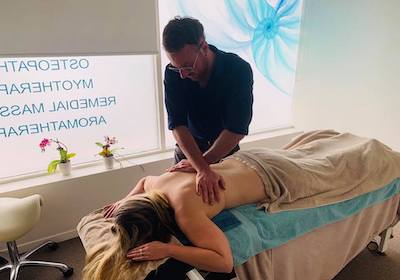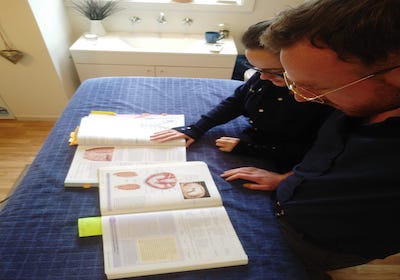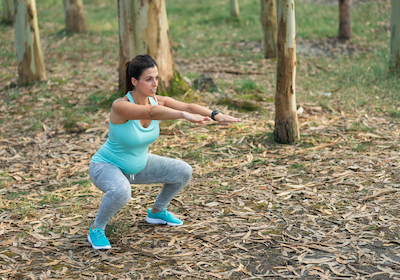
Have you ever had a remedial massage before & wondered why the therapist has asked you to stand still while they examine the posture of your body and perform an assessment? If you work in a job that requires you to sit for a long period of time, your body slowly shapes itself to stay comfortably in this position. If you then go to move you may experience pain because the body is moving outside of its favoured position. An example of this is tight hip flexors! These are a group of muscles in the front of your hip. With the help of a remedial massage therapist, they can help to reduce your pain through stretches & other manual therapy techniques!
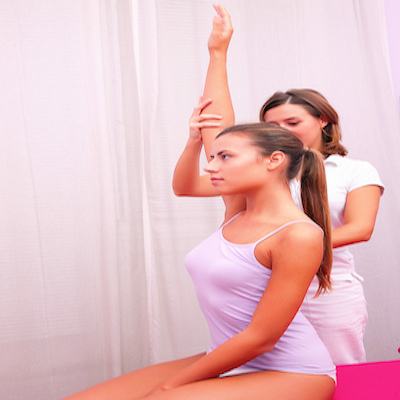
Assessments help your therapist determine the source of the problem!

Assessments aren’t always postural! If you are experiencing pain when you lift your arm above your head, an experienced practitioner wants to compare before and after. A remedial therapist will note the movement and the degrees to which you can move before you feel pain or restriction. This will give them a clearer understanding of which muscles are causing the pain. Because a lot of these muscles attach close to each other on the arm, the therapist may use special tests which can help isolate specific muscles. massage-shoulder-assessment This determines whether the problem muscle is on the front of your body such as in the pectoral muscles. If the pain is on the side, it may be due to the rotator cuff muscle group. Or if in the back, it may relate to muscles attaching to the shoulder blade or spine. To summarize:
  • Remedial Massage therapists treat muscular tightness, sprains & strains which may cause restriction of movement.
  • These conditions are determined through assessments.These are made up of different tests and observations that help the therapist notice limitations in movement & cause of pain.This enables the therapist to devise a treatment plan appropriate for your condition.
  • Re-assessment help show both the client and therapist whether the treatment has been effective.
If further treatment is required, the massage therapist may need to see you again. In complex cases, they have the option of referring to an Osteopath or another primary healthcare provider. This is not a waste of time as the assessment and treatment information will be passed on to another health practitioner, helping them narrow down to a solution!
Read More

Looking for a local massage in Chirnside Park and only want the best.

Massage is fantastic when you are feeling sore and tired and want a quick pick me up. Or when you have been exercising and experiencing post sport soreness, massage can get your blood moving and reduce the length of your aches and pains. Stress and muscle tightness is another common reason why people want to get a treatment. How do you know if the massage therapist is the right one for you?

Australian Trained Practitioners

There are many benefits to having a relaxing or remedial massage, however there are also a few risks.

It is important that your massage therapist knows that a treatment with them today is in fact, not a good idea. You want a practitioner who has the confidence, training and expertise to be able to say this to you. When practitioners have trained to an acceptable standard in Australia, they should be able to register with the private health insurance companies. massage-chirnside-park

Registered with Health Insurance

If your massage therapist is not able to be registered with the big funds, such as Medibank, Bupa and Australian Unity, chances are they do not have a high enough level of training.

You want to see a practitioner who has done more than a weekend course and puts a sign on the door. Some of the smaller funds unfortunately do make it a bit more difficult to register, even when the training meets Australian standards. This only affects a small portion of people seeking massage treatment.

Registered with a professional association

Massage Therapists do not have a nation wide registration board.

Therefore it is important that they are registered with a professional association. This ensures they must complete further ongoing training on a yearly basis and stay up to date with appropriate standards. Recognised professional associations include Massage and Myotherapy Australia, the Australian Traditional Medicine Society and the Association of Massage Therapists.

Insurance

You want to see a practitioner with insurance.

This sounds obvious, however people who are not registered with a professional association are also unlikely to be covered by professional indemnity insurance. People who lack training, don’t belong to a professional association or have insurance are unsafe and should not be providing professional services.

Ongoing Professional Training

massage-ongoing-training

The best massage therapists value continuing to develop their hands on skills and understanding of the human body and medical conditions and complaints.

Our massage therapists are not only encouraged to attend ongoing training outside the clinic, we provide weekly training and mentoring with allied health professionals. This ensures high quality care, patient safety and better service than you will receive elsewhere.

A quick recap on what to look for in a massage therapist.

  • Australian trained and qualified.
  • Registered with major health insurance companies such as Medibank, Bupa and Australian Unity.
  • Commit to joining and maintaining professional membership.
  • Have up to date insurance.
  • Participate in ongoing training and education.
If you would like a fantastic massage in Chirnside Park from practitioners who guarantee to provide all of these elements, book with us today.
Read More

Have you heard you should be doing your pelvic floor exercises while going to the toilet?

It doesn’t matter if you’re a man or a woman.

This is not good advice!

A trip to the loo is not the time to do your pelvic activations.

Not only will it not be particularly helpful to strengthen your pelvic floor in any meaningful way, you may be doing yourself harm.

That’s not what you wanted to hear right.

I know and I’m sorry, but it comes from a place of wanting to help you.

And we want you to get results.

If you’re more a video person, watch Osteopath Dr. Prue Eddie discuss this below.

Reason 1 – Urinary Tract Infections

You may not empty your bladder completely if you are doing your pelvic floor activation while going.

Retaining urine can then in turn increase your risk of developing a urinary tract infection.

We know you definitely don’t want one of those.

And they can be recurrent.

Urinary tract infections can sometimes be helped by drinking more fluid, especially water.

Getting an infection may lead to needing oral or antibiotics via a drip.

Let’s definitely avoid this situation.

pelvic floor pain management tips

Reason 2 – Kidney Damage and Kidney Stones

Not only may you have retained wee in your bladder, it can in fact move the wrong way and go back up the tube to the kidney.

This can increase your risk of developing a kidney infection, damage to the organ or even kidney stones.

Now passing kidney stones has been described by post natal women as being as bad (or possibly worse) than having a baby.

No body wants this.

Reason 3 – Not fully activating the pelvic floor muscles

You may only be activating part of your pelvic floor musculature.

Sorry if I have confused you.

The pelvic floor isn’t one muscle, but rather a group of them working together.

You want to make sure you can strengthen the whole group in order to improve your pelvic floor function.

do not do pelvic floor exercises on toilet

Pelvic Floor Exercises Essentials Recap:

We want to avoid pelvic floor exercises while urinating in order to avoid infections, kidney problems and muscular activation issues.

I would love to hear from you and answer any questions you have, especially regarding your pelvic floor health.

Feel free to make a comment or send an email at prue@korunaturaltherapies.com.au if you would rather keep it private.  Appointments are available if you would like to address your pelvic floor one on one.

Hope you enjoyed this article about why not to do your pelvic floor exercises on the toilet.

Read More

Want a pregnancy massage?

pregnancy massage Many mothers-to-be think that to get a good pregnancy massage, they need to be lying face-down and expect to be lying in a pregnancy pillow or a table with a pregnancy hole. In reality, these systems are usually designed for use by physiotherapists, chiropractors and osteopaths, where the pregnant client is lying face down for a maximum of 10-15min, not for hour long massages. Specially designed pregnancy pillow systems can be used up until 25 weeks but therapists must use caution and they should not be used for longer than 20 minutes. Therapists must ensure that there is sufficient support of the pelvis and that there is no increase in lumbar curve. Extra towels and padding must be used to pad up the belly cutout depending on the depth required for the client.

Pregnancy position matters

pregnancy massage position Lying face down while pregnant can actually aggravate the discomforts of pregnancy. According to Carole Osborne, author of Pre- and Perinatal Massage Therapy, putting pressure on the lower back while lying face down can increase intrauterine pressure, shorten the muscles in the lower back and increase strain on the ligaments. These ligaments maintain the correct position of the uterus and support the pelvis. As your pregnancy progresses the breasts will enlarge and some women may notice an increase in sinus pressure. Lying face down will put additional pressure on the chest and sinuses. For all of these reasons, we prefer to do most pregnancy massages in the side lying position.

Benefits of a side-lying position while pregnant

Catherine McInerney, Director of Pregnancy Massage Australia, recommends the side-lying position as the safest option for massage during pregnancy. Here is a link to an article she has written on client positioning for pregnancy massage: The side-lying position offers a number of positive physical and psychological benefits for both Mum and baby. This position puts the muscles in the lower back into a relaxed position and gently lengthens the spine. In turn, this reduces the effects of lower back pain whilst supporting the abdomen. It also decreases strain on uterine ligaments and prevents increase in sinus pressure. A side-lying, fetal position is a very soothing, comfortable position, and is a common sleeping position for most people, so it is very calming physically and psychologically. When side-lying the therapist has easy and safe access in order to treat those aches and pains commonly experienced during pregnancy.

What does a side-lying pregnancy massage look like?

side-lying pregnancy massage To ensure the safety and comfort of both mother and baby you will start lying on your left hand side with your head on a firm pillow. This will keep your head and neck in a neutral position. You will be given a small wedge shaped pillow to put under your abdomen. This is to support the growing uterus and prevent twisting and straining of the uterine ligaments and lumbar spine. Next, a pillow will be placed between your legs and your legs will be put at a 90 degree angle. This allows the pelvis to stay aligned, reduces pressure on the spine and provides the legs with even blood flow. Finally a small pillow or rolled towel will be placed under your arm to support the breast area and prevent rotation of your shoulders. You will be treated to a whole body massage with a focus on your particular areas of discomfort. Courtney is a Remedial Massage Therapist and Osteopath and can provide you with pregnancy massage. She has undertaken further training in regards to treating pregnant women. This ensures our mums-to-be and their little ones are in safe hands. Call or book online today! See our other blog post on Massage during pregnancy – benefits and contraindications
Read More