Common Headache/Migraine Triggers are foods, environmental factors and other parts of your lifestyle that you have associated with an increase in headache activity. You may already know what your triggers are, or you might still be in the process of identifying them.

chocolate linked to migraines

Particularly with migraine, it can sometimes be tricky to tell if something is a trigger or an early symptom.

A good example of this is chocolate.

Many people report chocolate as a trigger for their migraines, however it has been shown that the association may be due to the craving for something sweet (the symptom) rather than the chocolate triggering the migraine.

Read more about that here.

Common triggers to pay attention to include:

  • Hormonal Changes – migraines can be linked to an increase in Oestrogen, so many women experience an increase in migraines before or during their period
  • Alcohol – can cause dehydration which can lead to headaches. Withdrawal from alcohol can also produces a headache
  • Caffeine – too much or too little can produce a headache. This can explain why some people get a ‘weekend headache’ when they have a lie-in on a Sunday. Their body is used to that dose of caffeine early in the morning!
  • Sensory over-stimulation – this can include bright or flashing lights, loud noises, or strong smells.
  • Sleep – changes to sleeping habits can worsen or produce headaches or migraines. This includes jet-lag effects of travel between time zones.
  • Intense Physical Exertion – dilation of the blood vessels of the brain can in some cases produce a migraine after intense physical activity – such as high-intensity exercise or sexual intercourse
  • Weather – changes to barometric pressure or rapidly changing weather can influence headaches and migraines
  • Foods – many people notice a link with some foods and migraine. There seems to be a connection between foods high in tyrosine, including aged cheese, red wine, some fruits, chocolate, as well as some preservatives and migraine.

How do you know why you have a headache?

If you are unsure what is causing your migraines or headaches, it can be helpful to keep a headache diary.

Useful things to include in your entries are:

        • Foods eaten
        • Alcohol/caffeine consumed
        • Any activities that were outside your usual routine
        • What time the headache/migraine started
        • How long it lasted
        • What medication you took, if any, and did it work

You will need to be proactive in keeping your diary, as it usually takes a while for the migraine to begin following a trigger – so you need to know what you did yesterday!

We don’t recommend keeping a diary forever – just a snapshot. 30-60 days is usually long enough to pick up on a pattern.

headache diary journal

There are several apps that can store your diary – our favourite is Migraine Buddy. Don’t worry if you get headaches that aren’t migraines – this is equally applicable to you!

You can find migraine buddy in the App Store here.

and on Google Play for Android here.

Do you find it helpful to track your triggers? Do you know what your plan is once you’ve got the beginnings of a headache or migraine? Click here to read about a headache action plan.


Read More

headache migraine action

So you have recurrent headache, you need an action plan!

Headaches are one of the most frequent health complaints. There are many different types of headaches, and they vary in duration, severity and the symptoms that go along with pain. Having an action plan in place, especially in more severe headaches such as cluster headache and migraine, can reduce the severity and duration of your headache.

Developing an Action Planaction plan

You can work with your Osteopath or another health practitioner to develop a plan. It is important to consider different medications that your GP or Neurologist has prescribed or recommended. It is also important to think about what your triggers are and what you have had success with in the past.

What is in an Action Plan?

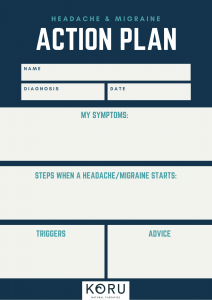
Your action plan should include:

  • Your diagnosis, if you have a more severe type of headache and have been to a Neurologist.
  • Normal recurring symptoms.
  • The steps you normally take to ward off/treat a headache or migraine.
  • Your known triggers.
  • Any other advice given to you by your health professional.

The Koru Headache Action Plan looks like this:

You can download a PDF of this file here:

Koru Headache Migraine action plan

Management is different for different types of headaches

Different headaches have different causes and mechanisms. This means that management strategies will differ depending on the cause. As an example, a cervicogenic headache (headache coming from your neck) will respond to strategies focused on relieving tension in the neck. Conversely, a migraine often responds well to sleep, which may be the only way to get through it.

Some of the steps you might use once a headache starts include:

  • Take medication prescribed by your Neurologist or GP.
  • Have a big drink of water.
  • Put a cool face washer on your face or neck.
  • Put a heat pack on your neck.
  • Have a 15 minute lie down, or listen to a short meditation or mindfulness recording.
  • Go for a short walk outside or away from your desk.

Headache/Migraine Management is often about Prevention

Although it is good to have a plan in place for when a headache starts, the best action we can take is to prevent them happening in the first place.

plan schedule routine

Recognising your triggers, which are different for everyone, can help to prevent headaches/migraines.

Lifestyle factors and routine play into headaches and migraines in a big way. Try to establish a solid routine, including eating, sleeping and waking at the same time each day.

If you would like some help making a headache action plan, BOOK ONLINE HERE give us a call on 03 9736 9408.

Read More

We are incredibly proud of our team, especially our Osteopaths volunteering in the bushfire zones across Victoria.

Many of our patients, friends and professional colleagues have been affected by the fire situation that is still affecting us, not only across the State, but across the land.

People have been coming in telling us how they were stranded along coastal towns over the Summer holiday period and sharing upsetting news about the loss of family properties.

Many people who were outside the danger zone have been expressing their concern and helplessness over the situation and not feeling that they can do enough to help others in our community.

There are others coming in feeling sadness and experiencing reminders of the Black Saturday bushfires.

We collectively wanted to contribute and offer support in a way that was practical, useful and within our capacity.

The osteopathic profession is active and with the help of a number of organisers, we were given the opportunity to volunteer our services at the Swan Reach Base Camp CFA and other emergency services.

In addition, as we were driving down into the affected region, we considered this an opportunity to do something to help the local wildlife.

We put the word out to the Koru community as well as local businesses and they heard our call.

Collectively in just a few days, we filled 2 cars of donated food and other supplies for wildlife carers.

Your contribution included:

  • Over 150kg of Wild Bird Seed
  • 50kg of carrots
  • 20kg of rabbit and guinea pig pellets
  • 30kg of sweet potatoes
  • 20kg of dog food
  • 40kg of bleach and other disinfectant to clean animal wounds and cages
  • 30kg of rockmelons
  • Plus there was a huge number of tinned corn and chickpeas.
  • Handmade kangaroo joey pouches and koala mittens for injured animals.
  • Animal pain relief medication.
  • Loads of nappies, wipes, cleaning cloths all used for the care of wildlife.
  • Plus a huge quantity of electrolytes that the firefighters really appreciated as they like it more than the standard ones they are supplied with.

There was so much it is genuinely hard to remember it all!

After delivering the goods, we were fortunate to witness many other acts of kindness.

We met volunteer wildlife carers, who were hardly sleeping to take care of injured and hungry animals.

Everyone in the community had a tale to tell about what had happened and a story of something good that had happened amongst the hardship.

There were cafes wanting to give us free coffee once they found out what we were doing in their town (we didn’t let them).

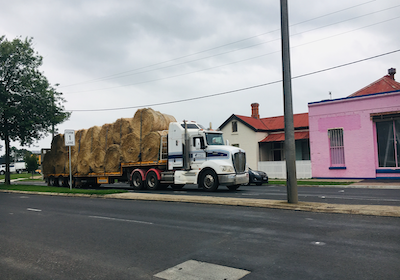
We saw countless numbers of semi trailors delivering hay, including from the drought stricken Western district.

We heard about many other beautiful stories, such as donut vans in parks, where locals were buying trays of donuts for truck drivers to take back to the hay donates plus a coffee for the truckies.

In times of stress, pain and hardship, it is easy to fall into the trap of feeling helpless.

I want to encourage you to take action, to shift helplessness into something helpful.

People have a different capacity to give and that’s okay.

Not everyone can give money, some people can but can’t give time.

Maybe you too can volunteer in some capacity, it can be worth asking yourself if you have a special skill that you can share with someone in need.

Another option is to plan your next holiday in the bushfire district.

The economy in the region is (or will be) devastated by what is happening and the people need work and their lives to return to.

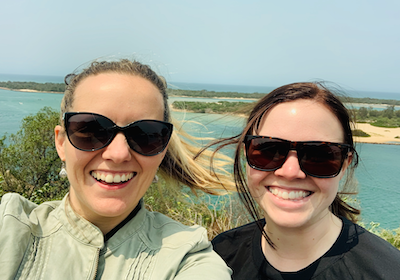
It is a beautiful part of the world. If in any doubt, here is a picture of Prue and Elizabeth (2 of our Osteopaths) enjoying a quick breakfast down in Lakes Entrance.

All it takes is just a little research and to find a way you can be genuinely helpful to those in need.

Not only will you brighten someones day, you will receive a side benefit of feeling the glow of giving.

You will feel empowered and potentially provide inspiration for others.

Feeling connected to those around you and to people in your community is not only good for your soul, it is genuinely good for your own health.

Next week another of our Osteopaths, Courtney is volunteering in the Alpine region.

Our plan is to continue to find ways to extend our services and care to those in need.

And to help others make a difference any way they can.

Read More

Do you always seem to get sick once your stress has subsided?

holiday relaxing stressfree It is quite common for us to hear that people have come down with a cold or get sick on holidays. Have you ever wondered why, when you’re finally giving your body what it has been asking for  – rest – it decides to get sick? This occurs as a result of long term strain on the immune system caused by stress.

Pesky Immune Systemimmune system stress

During times of stress, glucocorticoids (hormones) are released along with other stress hormones, including cortisol. Our body treats stress as if it has to fight an infection. The immune system ramps up and gets ready to bring in the big guns. It is thought that the glucocorticoids can re-activate latent viruses (such as herpes simplex I – cold sores). Once the period of stress is over, our fight or flight systems start to shut down, and our immune system decreases its activity as well, and the symptoms of whatever bug your body has been fighting become more apparent.  

The Let Down Effect

stress work busy We call this reduction in immune function after stress the Let Down Effect, a term coined by Dr Marc Schoen, PhD. He has researched the effects of stress on the body, and why we tend to get sick when we suddenly stop being so busy and stressed. Dr Schoen has found that the immune system doesn’t just go back to baseline, but below baseline. This leaves us open to infection, but also means if we had picked up a bug while we were stressed or busy, we might not have fought it off properly. Read more from Dr Schoen here.  

What can we do about this?

If you’re reading this while you’re sick on holidays – sorry there’s not much to do except drink plenty of fluids and rest. If you’re not sick yet – there are a few options for preventing this happening again in the future.

Option 1 – reduce stress!

You probably hear us banging on about stress all the time. This is because it is really important! Stress has been linked to heart disease, migraines, musculoskeletal pain, panic attacks, psoriasis and many other things, not just being more susceptible to the common cold. nature walk physical stimulation Managing your stress more effectively means that your body won’t go into such a strong ‘fight or flight’ response. Part of the way to effectively do this is by building time for active stress management when you know you will be busy or have a looming deadline. This might be a short walk, a 5 minute breathing exercise or listening to a podcast you enjoy rather than the news. We know that just 5-7 minutes of exercise are enough to counteract some of the effects of stress (although you will need more to reap the cardiovascular benefits).

Option 2 – relax slower!

It might seem counter-productive, but going from 100 to 0 quickly actually makes the Let Down Effect stronger. Relaxing slower after the busy or stressful time allows your body to come back to baseline slowly. This means your immune system doesn’t just call it a day as soon as you stop! For the next three days after the stressful or busy period is over, you need to include mental and physical stimulation for your body. Slowing winding down rather than coming to a complete halt can help prevent you getting sick on holidays.

Here mental stimulation stress sick holidaysare some ideas for physical stimulation:

  • a short but brisk walk
  • jogging up and down stairs
  • playing tag/tip/tiggy with your kids

And for mental stimulation:

  • do a crossword
  • play scrabble
  • do a jigsaw puzzle

Have you experienced the Let Down Effect?

If you would like some tips on planning in some stress management, or would like some help with breathing exercises, our osteopaths would love to be of assistance! Click here to book now. We know that breathing exercises have been shown to be highly effective in reducing stress. Check out our other blog on the effects of stress here.
Read More