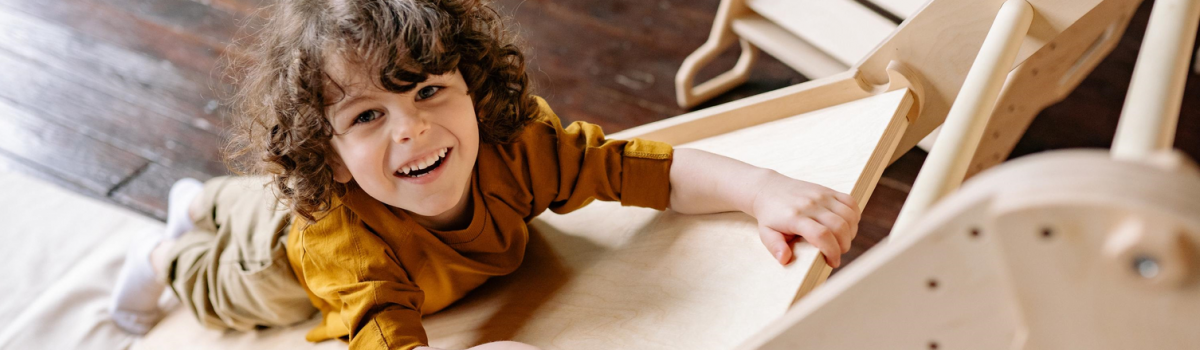
Seriously ever wondered what makes kids happy?

You wouldn’t be alone.

Happiness is all about perception and is in effect a state of mind, so when we talk about happiness in kids, we are in essence talking about emotional intelligence, security, and safety.

Contrary to popular belief, emotional intelligence is a learned skill, rather than you just being born with it.

This will allow them to thrive in the long term, much more than the next phone, game, lolly, or anything else that they may be wishing or even begging for.

According to psychologist …. The single most important determinant of nurturing happy healthy children is teaching them about your family history.

WHY IS YOUR FAMILY NARRATIVE IMPORTANT

Children like to know where they come from as it increases their sense of belonging, identity, security, and safety.

In essence, our family story could be considered the secret sauce that helps to bind us together.

Knowing seemingly simple details about your life and upbringing and that of your parents (their grandparents) helps to support their development.

In fact, an American Psychologist Sara Duke who worked with children with disabilities noted that children who know more about their family history tend to do better when faced with challenges.

Two more psychologists wanted to test out Sara Duke’s observation and developed a measure called the “Do you know” scale that asked children 20 questions.

The overwhelming conclusion was the more that children know about their lives, the stronger their sense of control, self-esteem increases and the more likely to have positive associations with how well their family functions.

These children also showed signs of being better equipped to be able to moderate stress, be resilient, and feel secure, even when facing significant threats.

In addition, the story of your family shapes longer-term thinking patterns, we will go into more information about this in a moment.

WHAT KINDS OF DETAILS ARE WE TALKING ABOUT

Do your children know….

  • Where you and your partner were born
  • The area in which you grew up
  • Where you went to school
  • Any serious illnesses that people in the family have had
  • The story of your birth
  • The struggles, successes and up and down journey that the collective family has traveled
  • What important milestones and lessons you have learnt along the way

Then apply the same ideas and stories for your parents (the childs’ grandparents).

WHICH STORIES ARE THE MOST INFLUENTIAL

Families can sometimes self-identify with specific stories or memories and influential moments in history as an important facet of their life.

In essence, the genetic story, cultural history, and the environments in which they lived are all important elements.

There are three types of stories identified.

1. The ascending story.

This is where the family may describe itself from coming from nothing and saying look how far we have come.

2. The descending story

The tale follows a core pathway of this is what we once had and now we only have this (we lost everything).

3. The oscillating family narrative

This is considered the most healthy one of all.

This is where the family story endures the ups and downs of life (which we all experience), including some successes, the failures, or unfortunate events and how the family stuck together during challenging times.

In effect, this helps to build family traditions and helps to facilitate the feeling of connectedness and the sense of the family unit.

It’s the concept of knowing where you come from.

It doesn’t just apply to kids or adults who are curious about their upbringing if they were adopted, or born via a donor, it applies to everyone.

In fact, many adults feel a sense of closeness or even closure by learning more about the family roots.

Happy families tend to be good communicators, so working on any communication pathways or skills is helpful.

Learning to tell family stories, including the many positives, and bouncing back from challenges faced will not only benefit the current generation but may have a positive impact on those to come.

How can you apply the secret sauce and nurture happy and healthy kids in your family?
Read More

Have you ever wondered what is the most important part of an osteopathic appointment?

We know our patients who come to see us, by and large look forward to treatment, particularly when they are getting hands-on osteopathic care.

To be honest, as a practitioner, this is the part that I spend the most time honing and expanding my knowledge and skills on, as I too find this very valuable.

But believe it or not, this is not the most important part of the consultation with my patients (in my opinion), and let me tell you why.

PRESENTING COMPLAINT AND CASE HISTORY TAKING

Taking a great and detailed history is extremely important for a whole number of reasons.

1. We want to get to know what’s wrong

This may sound obvious, or if you come in limping, bent over or in a cast, it may seem like we should already know.

The simple fact is, we need to know what’s wrong, what happened, what if any tests you have had, and if you’re on any medications (plus lots more).

2. We want to know what your goals are

You will have a specific reason as to why you have decided to get treatment now and what you want/wish you were doing. This helps us work together to help you achieve what it is that you want.

3. We want to get to know you

Our philosophy is to provide the best possible care tailored to each person and the only way we can do that is to really get to know you personally.

If we don’t know what’s wrong, your medical history, the goals or expectations or get to know you, we have no chance in giving you a good treatment.

But before we do that, we need to do something very important.

ASSESS YOU SO WE CAN MAKE A DIAGNOSIS

Before we treat you, we need to complete a comprehensive assessment, which may include a variety of different things.

We may need to check your most vital signs (such as your blood pressure), perform special tests (such as orthopaedic testing to rule out specific medical conditions, such as a nerve impingement, disc bulge, muscle tear etc.).

Other special tests such as neurological testing (testing the function of your nerves) or for example an abdominal examination, to determine if your pain is coming from an internal organ may also be very important.

In some instances, we may need to send you for a test, such as an x-ray or MRI for more information.

This helps us to determine your diagnosis.

MANAGEMENT PLAN

Once we have a diagnosis, we can work together to come up with an appropriate plan to support you on your pathway to recovery.

This may include treatment, exercise rehabilitation, specific lifestyle advice, a referral to another professional whom you would benefit from seeing, as well as specific information about your condition and what else you can do to help yourself.

And this is why I believe this is the most important part of your consultation.

It is your pathway to making the progress that you are after.

Our passion is to help you get great results, as quickly and efficiently as possible.

And to do that, we need a plan.

TREATMENT

What many of our patients don’t know is, we tailor our treatment specifically for you and it often varies from person to person.

Even if you have the same symptoms, you may not have the same diagnosis.

Or you may have very different health profiles, which would then change our advice regarding what is right for you at this time.

There are instances where people like a specific style of treatment (such as cracking) where we would not do this on some people. This could be age-related, specific medication use, or if you have particular medical conditions, it could be ill-advised or downright contraindicated.

In this instance, not only would we not recommend a certain treatment, the practitioner would decline performing it if asked.

This is a sign that you are seeing a highly skilled professional, someone who won’t just do something because you like it, but rather because it is not in your best interest.

In this scenario, would it not only be dangerous for you, but also for the practitioner.

If something went wrong or you had a bad side effect, you wouldn’t be very happy, and neither would your Osteopath.

We always explain why we would or wouldn’t perform a particular technique or approach with you.

It’s all about consent, just like we wouldn’t perform a technique you don’t like, we won’t perform one that we are not comfortable with.

And like we said, we want you to get great results and exceed your expectations, helping you find more health in your body.

Every part of your osteopathic appointment is important, but I believe the most important is where we plan your pathway to recovery.

We’d love to hear your thoughts about what you think is the most important part of an osteopathic appointment and why, get in touch with us at any time.

Read More

It’s not every day that you realise that you could have died from making what seemed like a very simple decision and mistake.

But this is exactly what happened to me on New Years Eve just gone.

And there are some valuable takeaways that you can apply, so you don’t find yourself in danger for no good reason.

*Disclaimer; this is a diving story, but you don’t have to go scuba diving to apply the lesson in your own life!

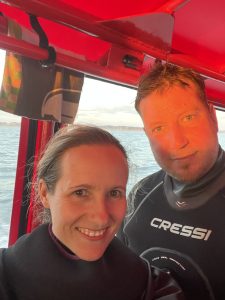
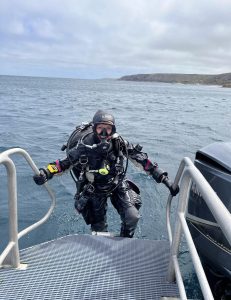
On New Years Eve and Mike and I were booked onto a night time scuba diving charter (no the lesson is not to stay on land, not go scuba diving, avoid night diving).

It was a hot night and wearing my dry suit, with a layer of merino wool base layer plus an extra insulated jump suit to keep me warm at 30m under water was like a personal sauna on the surface.

In order to safely travel on the boat (especially outside of Port Phillip heads), you need to keep the suit zipped up, or otherwise wear a life jacket (and there was no way I was adding an extra layer of anything).

To avoid fainting from overheating, I quickly undid the suit once we were in a safe location to cool down momentarily.

The tide was changing direction, which sometimes doesn’t follow the weather report and we found ourselves getting our gear on to jump in very quickly.

I ran through all my regular safety checks, that I could inflate my vest, breathe through my regulators and all the other normal steps.

Jumping into the water, within 3 seconds I felt water coming inside my suit, I had a leak.

The key thing to know here, is I was wearing a dry suit (not a wet suit) and am meant to stay dry (and warm).

This was the first key moment, when I should have made a different decision to the one made.

FAILURE POINT 1 – Ignoring the Problem

I ignored it.

Basically, what went through my mind was, how bad could it possibly be?

I’m wet now, so I might get a bit cold over the next 45 minutes, but it will be fine.

There was also a strong hint of stubbornness, of not wanting to resurface and possibly miss out on the dive.

So I kept going.

FAILURE POINT 2 – I didn’t tell anyone

We use hand signals under the water to communicate with our dive buddies and indicated that everything was okay.

At that point, it was, I was just wet.

Over the next few minutes, I noticed that I was having to kick a bit harder to keep up with the crew.

FAILURE POINT 3 – I still didn’t tell anyone

So it was a little tiring, but there was no reason to worry anyone else with what was going on, in fact, I wasn’t sure how I was going to tell them, so I just indicated I was okay again.

By this stage, we were slowly ascending from 30m to 20m over a few minutes, while kicking against a current, while checking out the underwater wreck of the ex-HMAS Canberra battleship.

We were looking inside metal, in the dark, using our torches to see a couple of metres at most at any time.

FAILURE POINT 4 – Still indicating I was okay

Once again, we checked in and all indicated we were fine (me included), even though I was getting tired and finding it hard to keep up with them.

Then I realised it was really hard to ascend.

I was having to literally swim upwards, while inflating my vest in order to go up.

Under normal circumstances, as you start to go up, you have to let air out of your vest as the air expands under pressure (and you can come up too quickly and get the bends).

By this stage, I knew I was in a bit of trouble.

It was dark, getting colder, my muscles were fatiguing and I was starting to panic.

I couldn’t keep up and my buddies were progressively getting further ahead.

Suddenly, I realised I was getting low on air and needed to start going to the surface (now).

But they weren’t looking at me, they had their heads in a hole on the side of a shipwreck (seriously who could blame them).

We were 18m from the surface.

I tried signalling with my torch.

There was only a few minutes of air up my sleeve and I was rapidly sucking it down and I was going to need more than normal to get to the surface.

I was about to deploy a safety marker to the surface (which was going to use more air), when the others saw I was signalling that I was low on air.

It’s fair to say that they were very confused, as we should have had enough for at least another 30 minutes, maybe more.

But they knew what to do.

Although they didn’t know what was happening or why.

We safely all slowly ascended to our designated safety stop at 6m under, where we stop and rest for 3 minutes, allowing for nitrogen build up in our body to dissipate and to reduce our risk of getting the bends.

If needed, there was the option to breathe off their tanks if required.

On the surface, I was exhausted and the boat came to pick us up quickly.

Then I encountered my next hurdle, how to get on the boat.

Not only was I fatiguing and on the verge of full body cramps, I couldn’t bend my arms or legs due to the amount of water that my suit had filled up with.

In fact, it was somewhere between 30-50L (that’s an extra 30-50kg).

I was stuck on the ladder, climbing up and got stuck and couldn’t move.

There was no energy to ask for help.

The boat captain realised what was happening, helped pull me up, then rolled me over, unzipped my suit and hung me upside down while the water poured out all over the boat.

Finally, I was feeling completely spent, but safe and started laughing uncontrollably.

WHAT SIMILAR MISTAKES YOU COULD BE MAKING

Have you ever…..?

  • Looked at your phone while driving and not caused an accident
  • Worn earphones crossing the street and not seen a car that you could have stepped out in front of
  • Drunk too much alcohol, fallen over and wondered how you didn’t hurt yourself

Or do you…..?

  • Eat too much take away and know one day it may become a problem
  • Never get around to exercise, even though you know it isn’t good for you
  • Spend too much time on technology and are quite possibly addicted to it

These are all examples of small mistakes, sometimes it is a once off that can have a big potential consequence, or a small but repeated issue that can become a danger over time.

When you pay attention to your own habits, behaviours and actions, you can learn massively from mistakes that we make, some could even happen on a daily basis.

LESSONS LEARNED

There are many lessons to be taken away from putting yourself in a dangerous situation, but here are a few of mine.

1. Communication is key

Tell someone that something is wrong, that way you can come up with a plan about what to do next together.

2. Don’t let stubbornness get in the way

Being stubborn can just make the problem get bigger and go on for longer than it needs to.

3. Let go of expectations

Just because we want something to happen in a particular way, at a particular time, it doesn’t always work out that way.

4. Ask for help

You don’t have to figure it all out by yourself or go it alone, even when it is your fault.

5. Reflect and grow

Take the time to really think about what is happening and why.

Really push yourself to dig deep on what is going on.

Write it down, including how you feel about it, not just the situation.

Then identify any potential struggles and things that could get in the way of you making a different decision in the future. Acknowledge the benefits and really understand why you want to change your behaviour.

This will allow for growth and lasting change.

Feel free to apply these lessons to your own scenarios.

If you have a story you would like to share with me, or an important lesson of your own, we’d love to hear from you.

Read More

Throughout the covid craziness of the past two years we have seen a rise in the number of patients presenting with pain and stiffness due to working from home.

They are constantly asking us for exercises, tips and advice in order to manage this pain from home and we are more than happy to give it! Keep reading for our top exercise and stretching advice while working from home!

How do I know if my work ergonomics is impacting my body?

At the beginning of the pandemic we posted a guide on how to transition from working in the office to working from home. Little did we know, almost 2 years later, that many of us would still be working from home and will continue to in the near future.

Sitting at an ergonomically poor desk for hours on end can lead to developing upper crossed syndrome, a condition involving the following;

  • Tight upper traps, pectoral, levator scapulae and suboccipital muscles
  • Weak deep neck flexors, lower traps, serratus anterior and rhomboid muscles

Patients with upper crossed syndrome often experience neck, back and shoulder pain, headaches, restricted movement and difficulty sitting comfortably for periods of time.

Other conditions which can be impacted by desk work ergonomics include low back pain, carpal tunnel syndrome and golfers/ tennis elbow. 

Does this sound familiar?

Try some of our favorite stretching and strengthening exercises below!

How can I help myself?

1. Seated book opens:

This is an easy exercise you can complete to help improve your thoracic spine mobility.

Start sitting in your chair, feet flat on the floor and back in an upright position. Raise your arms directly out in front of you until they are in line with your shoulders.

Place your palms together so that your thumbs are pointing up at the ceiling, this is your starting position.

Take a deep breath in, as you breathe out, separate your hands, keep your arm straight and by twisting through your mid back, try and touch the wall behind you. Return arm back to starting position and repeat on the other side. 

2. Upper trap/ levator scapulae stretch:

As mentioned previously, two muscles that can often become tight and sore when working at a desk for long periods of time are the upper portion of our trapezius muscle and our lev scap muscle.

Here is an easy variation of the same exercise which allows you to release some of the tension in both of these muscles. Start either seated or standing, place one of your arms diagonally behind your back.

Bend your neck to the opposite side of the arm you have just put behind your back, like you are trying to bring your ear towards your shoulder.

This will stretch your upper traps. In the same position, gently rotate your head 45° so your nose is pointing towards your armpit. This will stretch your lev scap.

If you don’t feel a stretch on these movements you can place your hand on your head and gently add a little bit of pressure to increase the stretch. Hold for 30 seconds and repeat on the other side.

3. Pec door stretch

Start by standing in an open doorway, standing closer to one side. Bend your arm and elbow so that they are both at 90° and place it on the side of the door frame.

With one foot in front of the other and keeping your arms still and stable, gently lean your body forward so that your body weight is on your front foot. You should feel a stretch through your anterior chest (pec major).

In order to stretch your pec minor muscle, you can bring your arm higher up on the door frame, so it’s above shoulder height and repeat the previous instructions.

Hold for 30 seconds and repeat on the other arm.

4. Scapula sets

Start by standing in an upright position in front of a wall.

Place your hands on the wall in front of you, just below shoulder height.

Bring your shoulders back and down and focus on trying to draw the bottom of your shoulder blades towards the opposite hip. Hold this position for 5 seconds and repeat it 5 times.

Don’t over exert or strain too much, keep breathing throughout the exercise, this should only be a gentle activation of the traps, rhomboids and lat dorsi muscles.

5. Chin tucks

This exercise can be completed seated, standing or lying down, depending on what is most comfortable for you.

For beginners, I would recommend starting standing or seated.

Pull your shoulders down and back, and maintain an upright posture.

Bring your chin back towards your neck, as if you were trying to resemble a double chin and hold for 3-5 seconds. Repeat this 3-5 times. 

Why is this important? 

Implementing the above advice and incorporating movement into your day to day life is not only beneficial for reducing aches and stiffness.

Daily movement and breaking up periods of being stationary has shown have a number of other benefits such as;

  • Boosting mood and reducing symptoms of depression & anxiety
  • Reducing brain fog and enhancing cognition
  • Reducing the risk of developing heart disease and various forms of cancers.

Heart disease and Stretching and strengthening are only one aspect of the road to recovery!

Manual therapy, ergonomic and breathing advice, retraining functional movement patterns and preventing recurrence of pain and injury are all equally important.

Head to our website or call us on 9736 9408 to book your osteopathy consultation to see how we can help you today!

Read More