
How Osteopathy Can Support Breastfeeding (Mother and Baby)

In my clinical experience as an osteopath, I often encounter the assumption that breastfeeding is an innate skill, something both mother and baby should simply know how to do. In reality, this couldn’t be further from the truth. Breastfeeding is a learned skill that develops between mother and baby together. It requires coordination, communication and adaptation from both, as they find a rhythm that works for them.
Breastfeeding Is a Learned Skill Between Mother and Baby
Breastfeeding is also a highly coordinated process involving both the baby and the mother. For the baby, it requires a finely tuned interaction between suck, swallow and breathing, alongside effective movement through the jaw, tongue, neck and rib cage. For the mother, it involves milk production, let-down reflexes, comfortable positioning and the ability to respond to the baby’s cues. When these processes are well coordinated, feeding can feel relatively smooth. When any part is disrupted, feeding can become challenging for both.
How Osteopathy Supports Breastfeeding Infants

This is where osteopathy can play an important and supportive role.
Osteopaths working with infants approach feeding difficulties through the lens of structure and function. Rather than focusing solely on latch or milk supply, we consider how the baby’s musculoskeletal and nervous systems, along with their overall body organisation, contribute to their ability to feed effectively.
After a detailed discussion to understand what is happening, your concerns, and the relevant pregnancy and health history of both you and your baby, we perform an assessment. This is combined with education and guidance to help you read your baby’s cues, hands-on treatment to address any areas of tension identified, and simple home-based strategies to support the care provided.
At our Chirnside Park clinic in Melbourne’s outer east, right at the gateway to the Yarra Valley, we regularly support families navigating breastfeeding challenges in collaboration with lactation consultants.
The Role of the Baby’s Body in Feeding
Tension through the neck or jaw may limit a baby’s ability to open their mouth or maintain a comfortable latch. The tongue and floor of the mouth play a central role in generating suction and coordinating swallowing.
The shape and contour of the palate also influence how the nipple is positioned within the mouth. A higher or narrower palate may make it more difficult for the baby to maintain an effective seal or achieve optimal tongue positioning, which can impact milk transfer and maternal comfort.
Breathing mechanics are equally important. Babies need to maintain a smooth rhythm between sucking, swallowing and breathing, and this relies on comfortable movement through the rib cage, diaphragm, chest and abdomen. If these areas are not moving well together, the coordination required for feeding can become more difficult, and babies may fatigue more easily or need to pause more frequently.
Why Posture and Whole Body Function Matter
Osteopathic assessment looks at how the head moves on the neck, how the jaw articulates, how the tongue functions, and how the palate and oral structures relate to feeding. We also consider how the whole body supports this process, including postural positioning and overall body tone.
Posture and positioning play a significant role in how a baby feeds. Restrictions or asymmetries through the trunk, pelvis or shoulders may affect how easily a baby can settle, turn their head or maintain alignment while at the breast. This is one of the reasons osteopaths assess the whole body, not just the head, neck and face. By considering how the entire body contributes to feeding, we can better understand why certain positions may feel easier or more difficult for a baby, and where support may be helpful.
Supporting the Mother: Comfort and Feeding Position
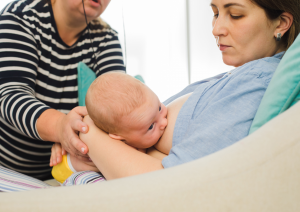
Assessment is hands-on and incorporates many of the same clinical observations used by a GP, paediatrician or maternal child health nurse.
This includes assessing body tone, developmental progress, infant reflexes and joint mobility. In addition, osteopathic assessment extends to evaluating how tissues move and respond, allowing us to identify areas of increased tension or reduced mobility that may be contributing to feeding difficulties. Treatment is then adapted to the individual baby, and is typically less physically demanding than the assessment itself, working with the baby’s responses to support more efficient movement and function.
An important part of this work is recognising that feeding is not just about the baby.
Osteopaths also support mothers experiencing discomfort associated with breastfeeding. Feeding often involves sustained positions, repetitive movements and physical load through the upper body. It is common for mothers to experience wrist strain, elbow or shoulder pain, neck tension or discomfort through the spine when sitting for extended periods. These factors can influence how comfortably and effectively a mother is able to position and support her baby during feeds. Comfort and ease also play a role in supporting the let-down reflex.
By addressing these areas, osteopathic care can help improve maternal comfort and reduce strain, which in turn supports a more sustainable and positive feeding experience. This reflects an important principle in osteopathy: we are working with the mother–baby dyad, not just one or the other.
Osteopathy and Lactation Consultants: A Collaborative Approach
We regularly work alongside lactation consultants and find their skills and knowledge highly complementary to what we do. Lactation consultants provide specialised support with latch, positioning, milk transfer and feeding plans, and osteopathy does not replace this care.It is common for lactation consultants to refer to osteopaths when they feel physical factors may be contributing to feeding challenges. Likewise, osteopaths frequently refer families to lactation consultants for ongoing feeding guidance and support. This collaborative approach helps ensure both the structural and practical aspects of feeding are supported.
When to Seek Support (and Why Earlier Is Better)
Another important, and often overlooked, aspect of this collaboration is early preparation. Many parents only seek support once difficulties have already developed. However, there is significant value in seeing a lactation consultant during pregnancy. Antenatal consultations can help parents understand what to expect, how to establish feeding in the early days and when to seek help if concerns arise.
From an osteopathic perspective, early awareness also allows for timely support where needed. If a baby is born following a more complex birth, or if early feeding challenges emerge, having an established network of care can make a meaningful difference.
Ultimately, supporting breastfeeding infants is not about one profession working in isolation. Feeding is a whole-body, relational process that involves both mother and baby. By addressing the physical factors that may influence feeding, while working alongside lactation consultants for specialised guidance, osteopaths contribute to a collaborative model of care that supports families to feed, connect and thrive.
Frequently Asked Questions

Can an osteopath help with breastfeeding difficulties?
Osteopaths can support breastfeeding by assessing how your baby’s body is functioning and identifying any areas that may be making feeding more difficult. This may include tension through the jaw, neck or body, challenges with coordinating suck, swallow and breathing, or difficulties maintaining a comfortable position at the breast
Treatment aims to support more efficient movement and coordination, while also providing guidance to parents on positioning and reading their baby’s cues. Osteopathy is often used alongside lactation support to provide a more complete approach to feeding.
What does an osteopath look for in a baby with feeding issues?
An osteopath will assess several aspects of your baby’s development and function, including body tone, reflexes, joint mobility and overall movement patterns. We also look at how the tongue, jaw and palate are working, as well as how your baby coordinates sucking, swallowing and breathing.
Importantly, we assess the whole body, not just the mouth. Posture, alignment and comfort through the trunk and neck can all influence how easily a baby is able to feed.
Can osteopathy help if my baby has trouble latching?
In some cases, difficulties with latching may be influenced by how a baby is able to move and organise their body. For example, tension through the jaw or neck, or difficulty maintaining alignment, may affect how easily a baby can achieve or sustain a latch.
These factors can also influence a baby’s ability to maintain a consistent lip seal, coordinate sucking efficiently, and stay engaged during a feed. Some babies may fatigue more quickly, come on and off the breast, fall asleep before completing a feed, lose milk from the mouth, or make clicking sounds while feeding.
Osteopathic care may help by addressing these contributing factors, supporting more efficient coordination and comfort during feeding.
However, latch technique and feeding strategies are best guided by a lactation consultant, and we commonly work alongside them to support both structure and function.
Do I still need to see a lactation consultant?
We regularly work alongside lactation consultants and find their skills and knowledge highly complementary to what we do. Lactation consultants provide specialised support with latch, positioning, milk transfer and feeding plans, and osteopathy does not replace this care. Lactation consultants may refer to osteopaths when they feel physical factors are contributing to feeding challenges, and osteopaths often refer families back to lactation consultants for ongoing feeding support. This collaborative approach helps ensure both the structural and practical aspects of feeding are supported.
Is osteopathic treatment safe for newborns?
Osteopathic assessment and treatment for babies is highly specific and adapted to their stage of development. Assessment includes many of the same observations used by other primary healthcare providers, such as GPs, paediatricians and maternal child health nurses.Treatment is tailored to the individual baby and is typically less physically demanding than the assessment itself, working with the baby’s responses to support comfort and function. We take a considered approach to care, avoiding techniques that are more likely to cause discomfort, and do not perform high velocity or cracking manipulation techniques on babies or young children.
Can osteopathy help with unsettled behaviour or feeding fatigue?
These concerns can sometimes be associated with how a baby is coordinating feeding and managing their body during and after feeds. Difficulties with breathing coordination, body tension or positioning may contribute to signs such as frequent breaks during feeds, unsettled behaviour or fatigue.Osteopathy may support these patterns by addressing contributing physical factors. It is important that any ongoing or concerning symptoms are also discussed with your GP or paediatrician.
When should I bring my baby to see an osteopath?
Babies can be seen at any stage, from the early days after birth through to later infancy. You may consider seeking support if feeding feels difficult, uncomfortable or inconsistent, or if your baby seems unsettled during or after feeds.Early support can be particularly helpful, especially if there has been a longer or more complex birth, or if feeding challenges are present in the first few weeks.
Can osteopathy support me as a mother during breastfeeding?
Yes. Osteopaths commonly support mothers experiencing discomfort associated with feeding. This may include wrist, elbow or shoulder pain, neck tension or discomfort through the spine.Improving maternal comfort can make feeding feel more sustainable and may also support the ability to relax during feeds, which plays a role in the let-down reflex.
Do I need a referral to see an osteopath?
No, you do not need a referral to see an osteopath. However, we often work closely with other healthcare providers and are happy to collaborate with your lactation consultant, GP or paediatrician to support you and your baby
About the Author
Dr. Prue Eddie is an Osteopath based in Chirnside Park in Melbourne’s outer east, with a clinical focus on infant feeding, early development and care of the mother–baby dyad.She has been working with mothers and babies in clinical practice since 2008, and has undertaken additional training in manual therapy for infants, including completion of a Graduate Certificate in Infant and Paediatric Manual Therapy at Victoria University in 2012.In addition to clinical practice, she is involved in teaching osteopaths in Australia and internationally, and is currently involved in a PhD research project investigating the role of osteopathic care in supporting babies experiencing breastfeeding difficulties associated with musculoskeletal dysfunction. More information about this research can be found at https://breastfeeding-research.com/.She regularly works alongside lactation consultants and other healthcare providers to support families navigating feeding challenges, combining a strong understanding of anatomy, physiology and clinical care.