
Understanding Reflux in Pregnancy

Pregnancy involves remarkable physiological and postural changes. One common experience is gastro-oesophageal reflux disease (GORD), also known as acid reflux. This may cause sensations such as heartburn, regurgitation, or nausea.
These symptoms often arise from a combination of hormonal changes, increased intra-abdominal pressure, and altered diaphragm position as the uterus expands.
Osteopaths use an evidence-informed, holistic approach to care. They consider how the body’s structural and functional relationships may contribute to comfort and movement. While osteopathic care does not treat reflux itself, it may help support the body’s natural adaptations to pregnancy.
The Ribs, Thorax, and Fascial Continuity
As pregnancy progresses, the growing uterus shifts the diaphragm upwards and influences rib cage motion. The ribs expand laterally, increasing the subcostal angle to support respiratory function despite reduced space within the thoracic cavity.
The thoracolumbar fascia, linea alba, and surrounding musculature form part of a continuous fascial network that distributes tension across the trunk. These structures assist in maintaining postural balance and regulating intra-abdominal pressure—factors that may influence overall comfort.
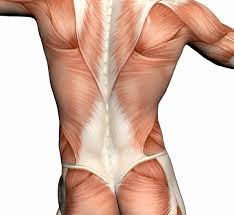
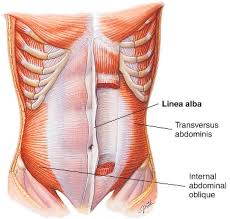
Osteopaths may assess movement in the thoracic spine, ribs, and associated soft tissues. Gentle manual techniques, where appropriate, may be used to promote ease of motion, postural adaptability, and comfort.
The Diaphragm and Its Fascial Relationships
The diaphragm is essential for breathing and maintaining the separation between thoracic and abdominal cavities. During pregnancy, it rises approximately 4–5 cm, changing breathing mechanics and pressure relationships in the abdomen.
Anatomically, the diaphragm’s crura blend with the anterior longitudinal ligament and the fascia overlying the psoas muscles, creating a direct fascial connection between the spine, abdomen, and pelvis. The linea alba and thoracolumbar fascia continue this chain, linking upper and lower body tension patterns.
In osteopathic assessment, attention may be given to these fascial continuities and their role in postural and respiratory dynamics. Supporting mobility in these areas can assist the body’s ability to adapt throughout pregnancy.
Cervical Spine and Neural Considerations
The cervical spine supports head posture and houses important neurological pathways.
-
- The vagus nerve, originating in the brainstem, contributes to parasympathetic control of the digestive tract, including the stomach.
-
- The phrenic nerve, arising from C3–C5, innervates the diaphragm.
Changes in cervical or upper thoracic tension may influence comfort and posture. Osteopathic assessment may include gentle mobilisation and soft tissue techniques aimed at supporting movement and balance in these regions.
Maintaining musculoskeletal mobility and influences on these nervous structures may support general wellbeing and comfort during pregnancy.
Breathing Mechanics and Intra-Abdominal Pressure
During pregnancy, breathing mechanics shift due to diaphragm elevation and rib cage expansion. These changes can influence intra-abdominal pressure, potentially affecting comfort or contributing to sensations of reflux in some individuals.
The fascial network connecting the diaphragm, back, abdominals, and pelvic floor plays a role in this pressure regulation.
Osteopaths may provide guidance on breath awareness and gentle postural strategies to support efficient breathing patterns. Such advice aims to complement—not replace—medical management for reflux symptoms.

The Autonomic Nervous System and Stress Response
The autonomic nervous system helps regulate digestion, breathing, and heart rate. During stress, sympathetic (“fight or flight”) activity increases, sometimes influencing the onset of reflux symptoms.
Osteopathic approaches that encourage relaxation—such as gentle soft tissue or indirect techniques—may support a sense of calm and physical ease. These are intended to complement broader self-care or medical strategies, rather than to alter autonomic function or treat reflux directly.
Broader Structural Continuities: The Filum Terminale
The filum terminale is a delicate structure that extends from the spinal cord to the coccyx, representing the lower anchor of the central nervous system. It continues the body’s connective and fascial network from cranial to caudal ends.
From an osteopathic perspective, this illustrates the importance of viewing the body as an integrated whole; where tension, posture, and motion in one area may relate to others.
While not directly linked to reflux, this perspective reinforces the osteopathic principle of interconnected structure and function in patient care.
A Collaborative, Patient-Centred Approach
Osteopaths provide patient-centred care that considers the physical, emotional, and functional needs of each individual.
For pregnant patients experiencing reflux, osteopathic assessment may help identify musculoskeletal or postural contributors to discomfort and support the body’s natural adaptations.
Osteopathic care is best considered a complementary approach, working alongside medical and allied health care. Patients experiencing reflux during pregnancy should always consult their GP, midwife, or obstetrician for appropriate medical guidance and management.
Key Takeaways
-
- Osteopaths use a whole-person, evidence-informed approach.
-
- Assessment may include rib, thoracic, cervical, and fascial relationships.
-
- Techniques aim to support comfort, posture, and breathing, not to treat reflux.
-
- Collaboration with medical care ensures safe and effective patient management.
Disclaimer
This article is intended for general educational purposes and does not constitute medical advice.
Osteopaths registered with the Osteopathy Board of Australia (AHPRA) provide care within an evidence-informed, patient-centred framework.
If you have concerns about reflux or other symptoms during pregnancy, please seek advice from your GP, midwife, or other qualified healthcare professional.
If you have any further questions?
Feel free to reach out to our team at Koru Natural Therapies, one of our Osteopaths may be able to assist you. Give us a call on 03) 9736 9408 or book online here.
Written by Dr. Schae Harrison (Osteopath)