
5 Ways to Ignite your Pelvic Floor Activation

1. Identify the Pelvic Floor Muscles
While this sounds like a no brainer, so often, people don’t actually know which muscles are the pelvic floor. Are they the ones in your inner thigh? (No) It’s your lower tummy muscles right? (NO). It involves clenching your butt muscles! (Wrong again). If you don’t know which muscles you are meant to be contracting, there is no possibility you will improve the way you want. The pelvic floor muscles attach basically from the inside of your pubic bone (below your tummy) and connect to your sit bones (the bony bits you literally sit on) and to your coccyx on the internal surface. To keep it simple, it is basically where you would place a panty liner in your underwear.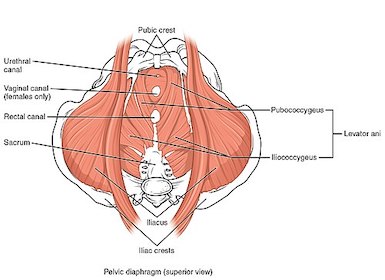
2. Foundations of Pelvic Floor Activation
Your pelvic floor muscles have a number of functions, including opening and closing bowels and urinary tract. Just as a once off exercise, you can either stop your flow while going to the toilet to provide your self with the sensory feedback to feel where the muscles are. Or alternatively, you can just imagine doing this and feel into your body to identify which muscles contract and then relax. We don’t want to start a new habit of doing this, as we can start to create other issues. Learn why not to do your pelvic floor exercises on the toilet here.3. Activate with Breathing
The pelvic floor should naturally and gently move as a part of the normal breathing cycle. As you breathe in, your pelvic floor should gently descend and as you breathe out, it should gently contract and lift towards your head. This is the same movement pattern that your thoracic diaphragm should do with breathing. Many people don’t have great breathing patterns, so working with this can really supercharge your pelvic floor function. Gently visualise your pelvic floor lowering and relaxing as you breathe in, at the same time, allow your tummy to expand and gently get bigger. Then as you breathe out, gently lift your skin away from your underwear and gently draw your tummy muscles in towards your spine. In order to amplify the effect, you can gently purse your lips and blow out as if you are blowing up a balloon, or breathing out fire.
4. Short and Long Contraction Activations
We need to be able to contract the pelvic muscles immediately and quickly on demand, such as with coughing to avoid any immediate incontinence issues. In addition, we need to be able to hold on for a few minutes if we are stuck in traffic in the car. Therefore, quick short contractions plus some longer holds can be useful in order to train the muscles to work how and when we need them. In order to make a start, we suggest you do 8 short contractions (with breathing out) that last a couple of seconds. Then perform this 3x per day, known as a set. You want at least 1 minute between each set. Then we want to do one long hold, basically contract and lift the floor for as long as you can (there is a reasonable chance 30 seconds may be a long time). Make sure you are not holding your breath as you do this. Then slowly build up so you are able to lightly activate for at least 1 minute. As a maximum, 100 pelvic floor contractions over the course of a day would be a lot. If you find yourself doing more than this, please reduce down. Quality is more important than quality.5. Don’t Over-Contract
 What does this mean?
You don’t want to form a habit of contracting the pelvic floor muscles all day long.
This can start to lead to its’ own unique set of challenges and issues.
You don’t want to contract any other muscle all day long either, so your pelvic floor shouldn’t be treated any differently.
In fact, you can start to develop issues such as urinary retention, which can predispose you to bladder and kidney infections or stones anywhere along the pathway.
If you want to learn more about pelvic floor activation, BOOK NOW with one of our experienced Osteopaths.
What does this mean?
You don’t want to form a habit of contracting the pelvic floor muscles all day long.
This can start to lead to its’ own unique set of challenges and issues.
You don’t want to contract any other muscle all day long either, so your pelvic floor shouldn’t be treated any differently.
In fact, you can start to develop issues such as urinary retention, which can predispose you to bladder and kidney infections or stones anywhere along the pathway.
If you want to learn more about pelvic floor activation, BOOK NOW with one of our experienced Osteopaths.