
Our Best Advice For Broken And Sprained Ankles

“How did you do it?”
That’s the first question everyone keeps asking when they see me in my moonboot, followed by what’s wrong?!
Given my love of adventurous activities, especially scuba diving, it would be easy to think that breaking the bottom of my leg, close to the ankle must be as a result of one of the external pastimes.
Wrong! It was something simple, so easy anyone could do it and it could happen to you.
I tripped on the front door ledge walking into my house.
The crazy thing is, I didn’t even fall over, just landed with a hard thud.
It hurt immediately and heard a crunch, but thought it would be possible to just walk it off.
In this case, that was a bad idea.
What not to do!
-
-
-
Don’t try and walk it off when you don’t know what’s going on.
Yes, that sounds like incredibly simple advice, but honestly, if it happened to me, it could happen to you too.
-
Ignore the pain and pretend it isn’t happening.
This is a recipe for disaster and can lead you to causing further injury by doing things that would not be recommended.
-
Take anti-inflammatories and assume it will get better.
You may be surprised to learn, that over the counter anti-inflammatory medication has been shown in research trials to slow down healing time.
The inflammatory response in the early phase of an injury helps the tissue to repair and we don’t want to take this opportunity away from the body.
-
Wear unsupportive footwear.
Your shoes do matter. If you are gripping to hold sandals, thongs, or other alternatives onto your foot, you will use additional muscles to keep it on your foot.
This in turn can lead you to using your foot incorrectly and may cause you more problems down the road.
-
Don’t strap it.
Using a compression stocking, strap or garment can be really helpful.
Not only will it help it to feel more supported, it will encourage the bodies own natural drainage process and potentially limit internal bruising.
-
-
What to do for your ankle injury
-
-
-
Try a compression sock
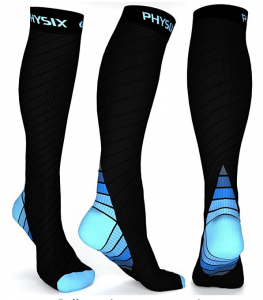 If you’re confused about what strapping technique to use or worried you are using the wrong bandage, use a knee-high compression sock instead.
In fact, this is what I used for the first 6 weeks following my injury, the whole time I was in the moon boot.
In fact, I really think this was the cheapest and simplest piece of advice I could give you.
Seriously click the link for my best compression sock choice here. Please note, we would never recommend a product unless we thought it was great, but as an amazon affiliate, we may receive a small gratuity for qualifying purchases.
-
Try arnica cream
What I love about arnica cream, is that it is simple to use and traditionally has been used to support the healing of bruising and swelling.
The one we recommend is Warbotanicals arnica cream, it does on well and smells great, which is why we stock it at the clinic.
-
Get professional advice
Did you know it can take months to fully recover from something as simple as an ankle sprain?
Yes seriously, as the ligaments are stretched, it alters the balance receptors in the foot and where your body will position itself in space.
As I’m currently only 6 weeks into my healing phase, I anticipate another 2-3 months until I achieve a full recovery.
-
Don’t believe it will only be 6 weeks
Bone takes 6 weeks to repair and many ligament and other soft tissue injuries can appear healthy on a scan at this length of time.
However, what a scan can not determine is the strength, balance, fitness, range of motion, and feedback you are getting from the injury site.
-
Complete your rehab
This is so often overlooked and now that my pain is reducing, it would be easy for my motivation to drop off.
But thankfully I have a wonderful Osteopath taking charge of my program and know the benefits of sticking to the management plan in order to get better.
If you have any questions about what to do for your leg or ankle injury, don’t hesitate to get in touch with us.
We know what you’re going through and how painful your ankle sprain or break can be.
-
-